AI Writes Code 24 Hours a Day. So Why Aren’t We All Millionaires Yet?

We live in interesting times.
For $20, you now have a personal programmer who works for you 24 hours a day. And it’s not hard to scale that up another 5–10 times.
You’d think that with resources like this, everyone would have become a successful entrepreneur by now. But we don’t really see that happening.
Why?
And then there are all these experiments where people make AI act as the CEO of a company, run a store, or trade on the market. As experiments, they’re super interesting. But nobody is rolling this out at scale. And, to be fair, we’ve been living with AI for about five years now. Okay, let’s say two years with fairly capable versions.
So let’s figure out what’s wrong here, and what’s getting in the way.
Who are you, anyway?
I’m Max. I work in venture investments at Mitgo/Admitad, a company I co-founded. Before that, I built and ran a large startup studio (more on what happened there). In general, for 20+ years now — since school — I’ve been building and promoting digital products. Here’s my earlier article with first observations on how AI changed product management. So far, all the points still hold up. Looks like I didn’t miss too badly :).
1. Some context
AI is obviously great. I definitely don’t want to go back to the world before it.
And when you’re building a new digital or digital-adjacent business, until very recently one of the main bottlenecks in the product was development.
Need to build an MVP? You look for a developer. Need to test a hypothesis? You wait in line for the team. Need to put together a landing page, an integration, a parser, or an internal tool? Again: development, estimates, timelines, sprints, technical debt.
Now we have AI.
It writes code. Builds prototypes. Assembles interfaces. Helps with analytics. Works at night. Doesn’t argue at daily standups. Doesn’t go on vacation. You’d think: this is it. The bottleneck is gone.
But the number of Ferraris in parking lots — except maybe outside the offices of OpenAI and Anthropic — hasn’t really increased.
Which means the bottleneck was never just code.
2. Haven’t we seen this somewhere before?
As people say on social media: remember blockchain, ICOs, NFTs, and the metaverse?
The script is very familiar:
a new technology appears; the market decides that everything is about to change; companies start trying to figure out where they can apply this technology; a huge number of teams try to build something on top of it. And then it turns out that technology itself does not create value. ??? Surprise.

During the ICO era, people tried to attach tokens and smart contracts to everything: logistics, real estate, games, media, social networks — you name it. Sometimes it was funny, sometimes expensive, sometimes criminal.
In the end, apart from Bitcoin and a handful of other projects, not much survived and became widely adopted.
Now imagine that AI had already existed back then, and people had been able to produce 100 times more projects. Would there have been many more survivors? I doubt it. Most likely, the process itself was broken.
Something similar is happening with AI. Only instead of “let’s attach a token,” we now hear: “let’s add an AI agent.”
3. More code does not mean more value
If product value came from the amount of code, large outsourcing companies with access to thousands of cheap developers would have become product monopolies long ago.
But that hasn’t happened.
Sorry, I need to state a couple of obvious things here. Because customers don’t buy code. Customers buy a solution to a problem.
They buy savings: time, money, risk, attention, effort. Sometimes status. Sometimes safety. Sometimes the confidence that tomorrow nothing will break. And, most importantly, they buy the way all of that is achieved. Safety is good. Safety like in prison is not exactly the same UX.
Very often, people also buy an experience that will not fall below a certain level. You go to McDonald’s in a new country not because you desperately want that exact burger, but because you know: the product you’ll get will not be worse than a certain standard. And that predictability is worth a lot.
Code is one possible tool and one possible method. Not necessarily the best one.
So what gets in the way?
4. Sales & Marketing Are Becoming More Important
Here’s the paradox of the AI era: the product has become easier to build, but much harder to sell.
The number of applications has grown massively — both in B2C and B2B niches.
And of course, everyone is trying to talk about them, show them, promote them. Every day, I get five messages from people promising that their product will save our company 80% of time, replace a department, increase sales, automate processes, and bring happiness into our home.
But are there more users and companies now? Do they have more free time and attention? And, more basically: do they have bigger budgets? Definitely not. If anything, there’s less money around — thanks to global inflation and military conflicts.
So, in short: hundreds of new fish have been added to the pond, but the amount of water has stayed the same. This is the new reality. We need to accept it and learn to live with it.
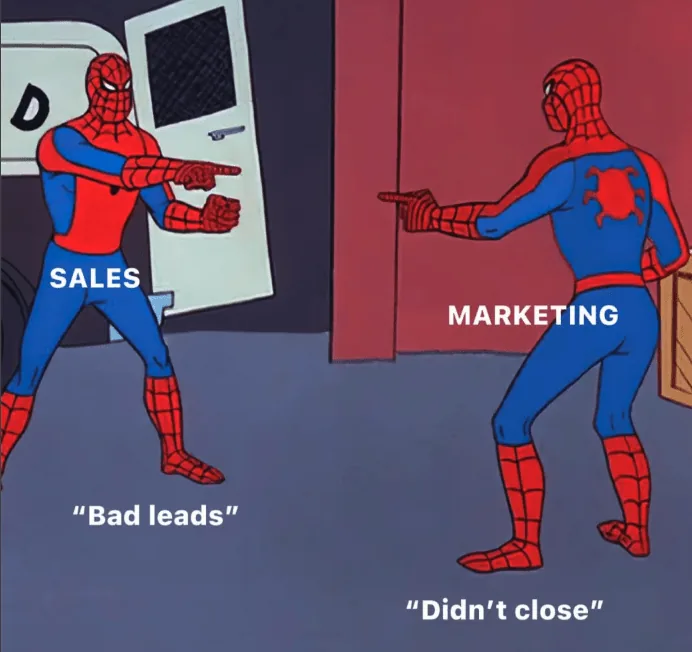
How is the market already reacting?
Things have become difficult. It’s difficult to reach the customer, and difficult to explain how exactly you can help.
Have you noticed that one of the new and fast-growing roles in the market is Forward Deployed Engineers?
These are engineers from a company who go to the customer’s office and, sitting together with the client, build a product on top of their company’s technology for that specific business. The Palantir guys made this role fashionable (read more).
There used to be far fewer offers on the market, so it was easier to understand what was going on. You knew: here’s a vendor, and here’s what they can do. You go to them, and they deliver slowly and expensively.
But what choice did you have?
Now it’s impossible to keep track of what is happening in the market. So the vendor itself has to come to you and help explain and implement the value it has. Otherwise, you may never get to them at all.
Even Anthropic and OpenAI have created their own deployment companies (proof). And if they need this, what can we say about smaller players nobody hears about every day?
Okay, there are more fish and less water. But why can’t AI manage businesses? Maybe we should just rely on autopilot, and then there will be enough space in this pond for everyone?
5. The Scary Word Everyone Will Have to Learn: Attribution
Attribution is an attempt to understand what exactly influenced the result.
In marketing: which channel brought the customer. In product: which feature changed user behavior. In sales: which argument helped close the deal. In business: which decision actually created money, and which one just looked nice in a presentation.
The problem is that the modern customer journey has become almost unreadable.
A person sees a recommendation in a messenger. Then watches a video on YouTube. Then asks ChatGPT. Then visits the website from their phone. Then leaves. Then, a week later, buys from a laptop after receiving an email from sales.
Who brought the customer?
Marketing? Product? Brand? Content? Sales? A discount? A friend? An AI answer? Chance?
Most likely, all of them played a role. But what was the weight of each one in the final decision?
If we cannot answer this question, then managing and driving growth becomes very difficult. AI is only as good as the quality of the data and signals it has.
And now we ask AI to manage our business. AI looks at the data sources we gave it and, based on them, tries to suggest the optimal answer.
Revenue went up. Retention went down. CAC increased. Payment conversion decreased. LTV looks decent, but cohorts are noisy. Users became more active, but didn’t bring in more money.
AI will write an intelligent comment. Maybe even a very intelligent one.
But the main question is not “what changed?” The main question is “why did it change?” and “what should we do now?”
Maybe the product got worse. Maybe marketing brought the wrong users. Maybe competitors offered a discount. Maybe sales got worse at closing. Maybe the data broke. Maybe it’s just seasonality. Maybe all of the above.
And here’s an even less obvious point.
You gave AI access to your Google Analytics. There is a sea of data there. Did that make it smarter and more useful? Or is there a lot of noise and signals without attribution, which will lead the project away from the right decision?

So, on the one hand, AI needs data. On the other hand, the wrong data can make things even worse than having no data at all.
But there is a bright side: we humans still have some time to adapt.
With the data we have and the level of attribution we currently possess, a machine uprising and the enslavement of humanity would be highly inefficient :).
6. Key Business Decisions: The Line Between “Keep Going” and “Kill It”
90% of key business decisions can be called investment decisions. A decision that truly affects the result is a decision to put resources — money, time — into something, or not.
It’s nice and convenient when decisions are obvious: this is bad, we shut it down; this is good, we give it more resources.
But in real life, the devil is in the details — and in complex things where nothing is clear. There is a lot of uncertainty, and still, decisions have to be made.
For example: should the project be given more time, or should it be shut down?
Shut it down too early — and you kill something that could have grown. Shut it down too late — and you burn money, the team, and the faith of investors and owners. Look only at metrics — and you fall into the trap of bad attribution. Look only at intuition — and you’re two steps away from becoming an “artist” and a tyrant.
AI can help gather arguments. But again, see the point about data and attribution: what are these arguments based on? It can even make the decision for you, but the consequences of the quality of that decision will affect people, not AI.
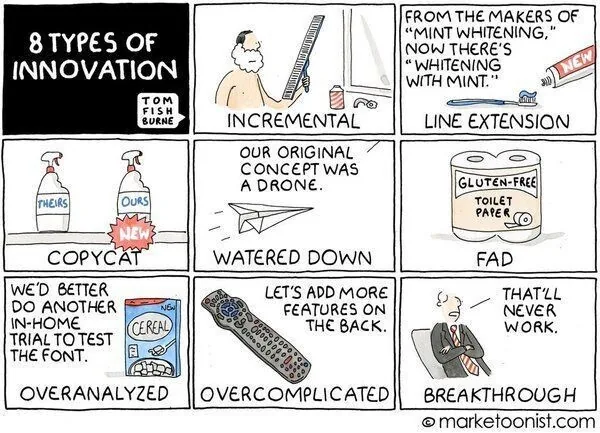
And, as current experiments seem to show, giving AI access to existing sources of knowledge and the ability to make decisions on its own leads to bankruptcy (link one, link two, and link three). And that’s in very simplified conditions — not inside some international company with different types of customers and products.
Here’s a practical example of how this works.
You build a smart feedback loop. You release an update, measure what changed, draw conclusions, change the product, and repeat. And people are now massively trying to introduce AI for this kind of task: come on, buddy, autonomously build us a better business or improve our processes.
Cool. But where is the concept of “enough”?
When should it stop improving? Based on what data can AI decide: “The magic pot should stop cooking”?
And here we return to attribution — a dense forest that will not be solved or digitized anytime soon.
7. Conclusion
Building products and businesses has not become easier.
But now the headache is no longer finding developers at a reasonable price. The headache is paying more attention to questions like: where are we going, what data should we collect, how do we understand what influences the result and what does not?
It’s curious that Sales & Marketing have become the new human frontier.
Everything logical, AI already does better than us. But everything that is multifactorial, unclear, tangled, hidden behind the motivations of different stakeholders, not digitized at all — and unclear whether it ever will be — is exactly where our imperfections and irrationality still slow down the full transition to AI.
And this is where humans still have a lot of digging to do.
We live in interesting times! 🙂